Resaltar:
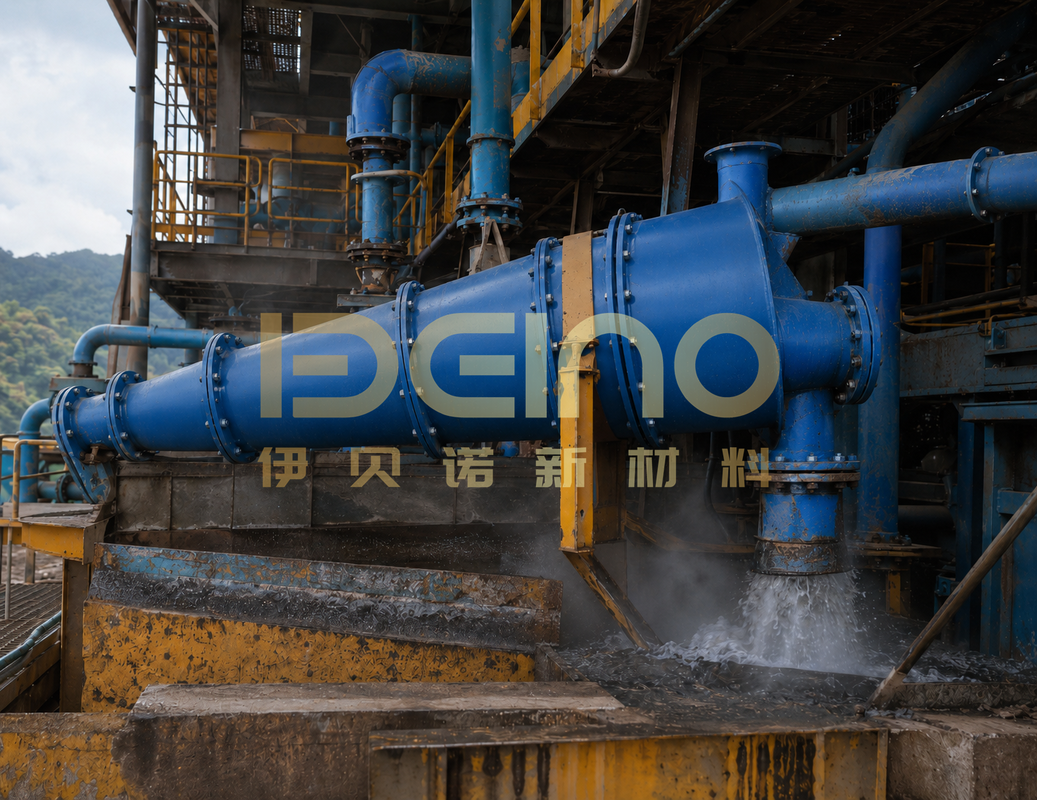
ciclón revestido de cerámica para la recolección de polvo
, ciclón de separación de polvo abrasivo
, equipo revestido de cerámica con garantía
Requisito de mantenimiento: |
Bajo |
Tamaño: |
Personalizable |
Solicitud: |
Minería, química, generación de energía, etc. |
Grosor del forro: |
Normalmente de 6 a 20 mm |
Acabado superficial: |
Liso |
Resistencia al desgaste: |
Alta resistencia al desgaste |
Tipos de equipos comunes: |
Tuberías, codos, tanques, toboganes, bombas. |
El espesor del revestimiento: |
3-25 mm |
Color: |
Blanco |
Resistencia a la presión: |
Alto |
Densidad: |
3.75 g/cm3 |
Resistencia: |
Temperatura alta |
Ciclón revestido de cerámica para separación y recolección de polvo abrasivo
Descripción del Producto
En los sistemas de manipulación y recolección de polvo, los separadores ciclónicos a menudo están expuestos al impacto y la erosión continuos del polvo abrasivo, el polvo y los materiales granulares. Para industrias como las del cemento, el carbón, la metalurgia, el procesamiento químico, los materiales de construcción, la minería y los materiales para baterías de litio, los ciclones de acero ordinarios pueden desgastarse rápidamente, provocando mantenimiento frecuente, fugas de polvo, rendimiento de separación inestable y paradas inesperadas.
Aciclón revestido de cerámicaestá diseñado para resolver estos problemas de desgaste. Al instalar un revestimiento cerámico resistente al desgaste dentro del cuerpo del ciclón de acero, el equipo combina la resistencia estructural del acero con la excelente resistencia a la abrasión de la cerámica. Ayuda a prolongar la vida útil del ciclón, reducir la frecuencia de mantenimiento y proteger los materiales del contacto directo con la carcasa de acero.
Según la estructura del producto, el ciclón está fabricado con unEstructura externa de acero y revestimiento interno de cerámica.. El cuerpo del ciclón puede ser cilíndrico o cónico y el revestimiento cerámico se puede personalizar en diferentes tamaños y formas según la estructura interna. El espesor cerámico generalmente se diseña en5-10 mm, dependiendo de las condiciones de trabajo, posición de desgaste, área de revestimiento y método de instalación.
¿Por qué elegir el revestimiento cerámico para los separadores ciclónicos?
En los sistemas de polvo abrasivo, el desgaste más grave suele aparecer en el área de entrada, la pared del cilindro, la sección del cono y el área de salida. Estas áreas son lavadas continuamente por partículas de alta velocidad. Una vez que la pared de acero se adelgaza o se desgasta, la planta puede enfrentar reparaciones de equipos, interrupciones de la producción y mayores costos operativos.
El revestimiento cerámico proporciona una solución práctica de protección contra el desgaste. No solo se utiliza para mejorar la resistencia a la abrasión, sino también para reducir los trabajos de reparación repetidos y ayudar al ciclón a funcionar de manera más confiable en entornos industriales hostiles.

Beneficios clave
| Beneficio |
Lo que significa para los clientes |
| Vida útil más larga |
Reduce la frecuencia de reemplazo del ciclón en condiciones abrasivas. |
| Menor costo de mantenimiento |
Ayuda a reducir los trabajos repetidos de soldadura, parcheo y reparación. |
| Menos apagado |
Admite una operación de producción y recolección de polvo más estable |
| Protección de la pureza del material |
Reduce el contacto directo entre el polvo y la superficie del acero. |
| Diseño personalizado |
El tamaño, la forma, el grosor y el diseño de la cerámica se pueden diseñar según los dibujos. |
| Fácil instalación |
Se encuentra disponible un revestimiento cerámico de fábrica, por lo que el ciclón se puede instalar más fácilmente en el sitio. |
Aplicaciones típicas
Los ciclones revestidos de cerámica se pueden utilizar para la separación de materiales, recolección de polvo, clasificación de polvo, secado de polvo, mezcla de materiales y recolección de polvo residual. Son adecuados para sistemas de manipulación de polvo, polvo y materiales granulares donde la abrasión es un problema importante.
Las industrias de aplicaciones comunes incluyen:
Plantas de cemento
Sistemas de manipulación de carbón
Plantas metalúrgicas
Procesamiento de polvo químico
Materiales de construcción
Minería y procesamiento de minerales
Manipulación de materiales de baterías de litio.
Procesamiento de alimentos y polvos de alta pureza.
En las industrias del cemento y la minería, el objetivo principal suele ser la protección contra el desgaste. Para la manipulación de productos químicos, baterías de litio y polvos relacionados con alimentos, el revestimiento cerámico también puede ayudar a aislar los materiales de la carcasa de acero y respaldar la protección de la pureza del material.
Métodos de instalación de revestimiento cerámico
El revestimiento cerámico se instala principalmente mediante unión adhesiva. Según las diferentes condiciones de trabajo y los requisitos del cliente, también se puede utilizar soldadura de pernos o fijación con ranura en cola de milano. Se recomienda el revestimiento cerámico de fábrica para equipos ciclónicos nuevos porque permite un mejor control de calidad antes del envío y facilita la instalación en el sitio para el cliente.
| Método de instalación |
Condición adecuada |
| Unión adhesiva |
Separación general de polvo y recolección de polvo. |
| Soldadura de pernos |
Mayor impacto o requisito de fijación más fuerte |
| Fijación de ranura de cola de milano |
Desgaste severo o requisito especial anticaída. |
| Forro de fábrica |
Equipo nuevo o ciclón de reemplazo. |

 ¡Su mensaje debe tener entre 20 y 3.000 caracteres!